

🤔 Easy Lateral Thinking Riddles
A man walks into a room, turns off the light, and goes to bed. The next morning, he discovers that many people have been affected by his action. What happened?
👉 Answer: He was a lighthouse keeper, and turning off the light caused a ship to lose its navigation signal.A woman has four daughters, and each daughter has one brother. How many children does she have?
👉 Answer: Five children. All four daughters share the same brother.A farmer has 17 sheep. All but nine run away. How many sheep remain?
👉 Answer: Nine sheep.A man is standing in the rain without an umbrella or hat, but not a single hair on his head gets wet. Why?
👉 Answer: He is bald.A person enters a room with a match, a candle, a lamp, and a fireplace. What should they light first?
👉 Answer: The match.A plane crashes on the border between two countries. Where should the survivors be buried?
👉 Answer: Nowhere. Survivors are not buried.A girl drops a glass onto a concrete floor, but the glass does not break. How?
👉 Answer: The glass was empty of liquid? No—the riddle’s trick is that she dropped a drinking glass onto a thick carpet placed over the concrete.A man shaves several times a day but still has a beard. How is this possible?
👉 Answer: He is a barber who shaves other people.What can travel around the world while staying in one corner?
👉 Answer: A postage stamp.A person has a single match and enters a dark room containing a candle and a gas stove. What do they light first?
👉 Answer: The match.
🔍 Tricky Lateral Thinking Riddles
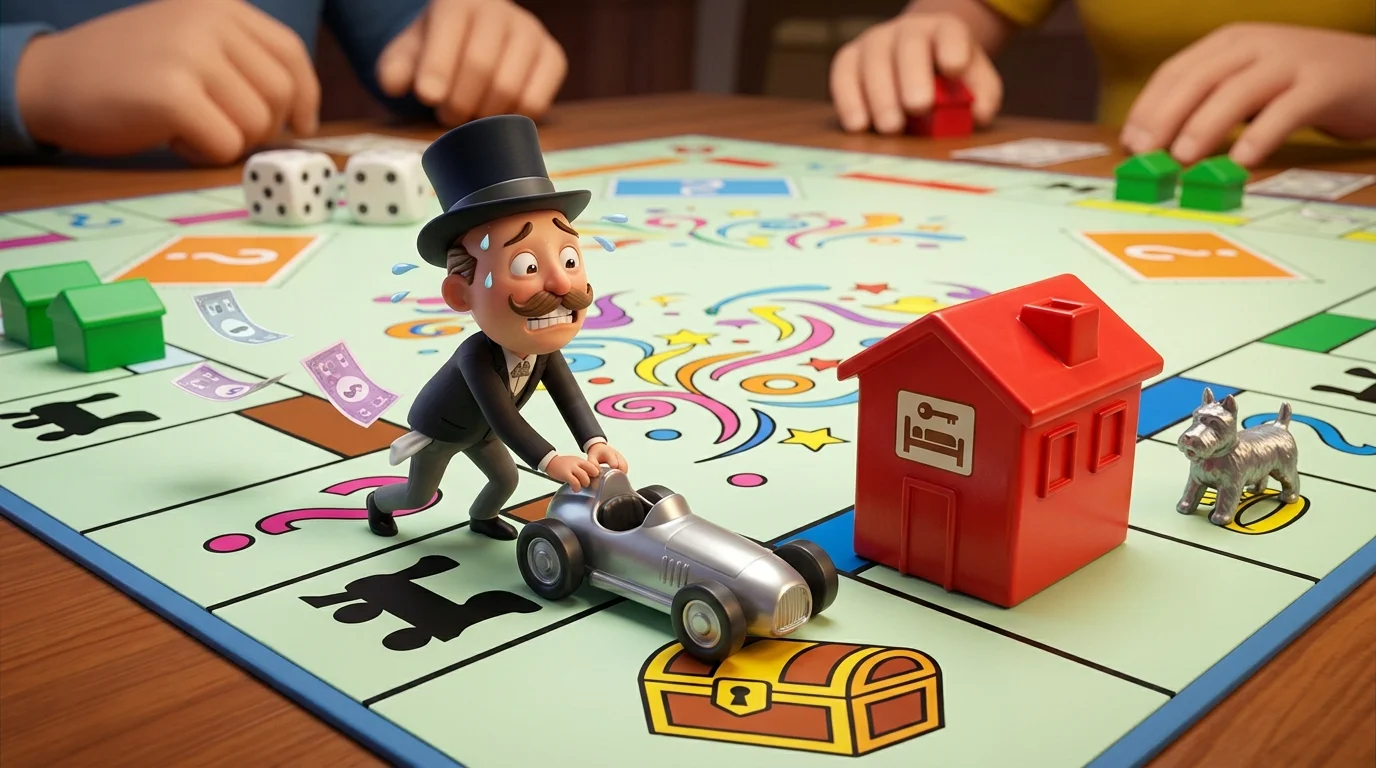
A man pushes his car to a hotel and immediately knows he has lost all his money. Why?
👉 Answer: He is playing a game of Monopoly.A woman lives on the tenth floor. Every morning, she takes the elevator down to the ground floor. When she returns, she takes it to the seventh floor and walks the rest of the way, except on rainy days. Why?
👉 Answer: She is short and can only reach the seventh-floor button. On rainy days, she uses her umbrella to press the tenth-floor button.A man is found in a room with a puddle of water and broken glass. There is no sign of a struggle. What happened?
👉 Answer: A fishbowl fell and broke, leaving its water on the floor.A person sees a house with every wall facing south. A bear walks past the house. What color is the bear?
👉 Answer: White. The house is at the North Pole, where polar bears live.A man enters a restaurant and asks for a glass of water. The waiter suddenly shouts at him. The man says thank you and leaves. Why?
👉 Answer: The man had hiccups, and the waiter’s sudden shout startled him enough to stop them.A woman has two coins that add up to 30 cents. One of them is not a nickel. What are the coins?
👉 Answer: A quarter and a nickel. One coin is not a nickel—the quarter.A man is found in a locked room with no windows. There is a puddle of water beside him. How did he get there?
👉 Answer: He entered through the door, which was locked afterward. The puddle came from melting ice.A person looks at a clock and sees that the hands are moving, but the time never changes. How?
👉 Answer: It is a picture or drawing of a clock.A man buys something for five dollars and sells it for four dollars, yet makes a profit. How?
👉 Answer: He originally bought it for less than four dollars and is comparing the selling price with his actual cost.A woman walks into a shop, buys a dozen eggs, and leaves with 13 eggs. How?
👉 Answer: The shopkeeper gives her an extra egg as a bonus.
😂 Funny Lateral Thinking Riddles
Why did the man take a ladder to the library?
👉 Answer: He wanted to reach the high shelves.A man says he can jump higher than a house. How can he prove it?
👉 Answer: A house cannot jump at all!Why did the student bring a ladder to school?
👉 Answer: Because they wanted to go to high school!What gets wetter the more it dries?
👉 Answer: A towel.Why did the calendar look nervous?
👉 Answer: Its days were numbered.A person throws a ball as hard as possible, but it comes back without hitting anything. How?
👉 Answer: They throw it straight up into the air.Why did the computer go to the doctor?
👉 Answer: It had a virus.What has a head and a tail but no body?
👉 Answer: A coin.Why did the man put his money in the freezer?
👉 Answer: He wanted cold, hard cash.What can you catch but cannot throw?
👉 Answer: A cold.
🕵️ Mystery Lateral Thinking Riddles
A detective finds a person standing beside a broken window. There is water on the floor and no one else in the room. What happened?
👉 Answer: A flower vase fell from the windowsill and broke.A man is found sitting in a room with a wet floor and an open window. Nothing is missing. Why is the floor wet?
👉 Answer: Rain came through the open window.A woman enters her house and immediately knows someone has been there, even though nothing is missing. How?
👉 Answer: She notices that the clock is showing a different time because someone reset it.A detective sees footprints leading into a room but none leading out. The room has only one door. How did the person leave?
👉 Answer: The person walked backward, stepping into their original footprints.A man receives a package with no sender’s name. He opens it and immediately knows who sent it. How?
👉 Answer: He recognizes the handwriting on the note inside.A person finds a wet umbrella inside a completely dry room. How did it get wet?
👉 Answer: Someone brought it inside after walking in the rain.A shop owner hears a crash but finds no broken items. What happened?
👉 Answer: A customer dropped a bag of ice, which broke apart and melted.A woman sees a light turn on in an empty house. She knows nobody has entered. How?
👉 Answer: The light is controlled by an automatic timer.A man finds a birthday cake with candles still burning, but nobody is in the room. What happened?
👉 Answer: The guests have left after lighting the candles.A detective finds a clock stopped at exactly noon. Why might it have stopped?
👉 Answer: Its battery ran out.
🧠 Hard Lateral Thinking Riddles
A man is found in a field with an unopened package beside him. There are no footprints nearby. What is the package?
👉 Answer: A parachute that failed to open.A woman enters a room, sees a table with three apples, and takes two. How many apples does she have?
👉 Answer: Two apples.A man lives in a house with no stairs, yet he reaches the second floor every day. How?
👉 Answer: He uses an elevator.A person looks at a photograph and says, “I have no siblings, but the person in this picture is the child of my parents.” Who is it?
👉 Answer: The person in the photograph is the speaker.A man walks into a room and sees a clock showing 3:00. He knows it is wrong without checking another clock. How?
👉 Answer: The clock has no hands.A woman has a basket containing six eggs. Six people each take one egg, but one egg remains in the basket. How?
👉 Answer: The last person takes the basket with the final egg still inside.A person is surrounded by water but is not wet. How?
👉 Answer: They are looking at a picture of an island surrounded by water.A man says, “Yesterday I was 20, and next year I will be 22.” How is this possible?
👉 Answer: He says this on January 1, and his birthday is December 31. He turned 21 yesterday and will turn 22 this year.A person sees a road with no cars, a river with no water, and a forest with no trees. Where are they?
👉 Answer: Looking at a map.A woman turns a key, but no lock opens. What did she do?
👉 Answer: She started a car.
🚪 Door and Room Lateral Thinking Riddles
A man stands outside a closed door. He knows there is a light on inside, but he cannot see through the door. How?
👉 Answer: He can see light shining underneath the door.A room has four corners. A cat sits in each corner, and each cat sees three cats. How many cats are there?
👉 Answer: Four cats.A person enters a room with no windows and one door. They leave without opening the door. How?
👉 Answer: They entered and left through a large opening in the ceiling.A door is open, but nobody can walk through it. Why?
👉 Answer: It is a door in a photograph or painting.A man knocks on a door, but nobody answers. He knows someone is home. Why?
👉 Answer: He can hear a television or music playing inside.A room is full of people, but there is nobody inside. How?
👉 Answer: It is a room full of photographs of people.What kind of room has no doors or windows?
👉 Answer: A mushroom.A person opens a door and sees the same room they just left. How?
👉 Answer: They are walking through a revolving door or a doorway between identical rooms.A man locks a door but leaves the room unlocked. How?
👉 Answer: He locks a cabinet door inside the room.A room becomes brighter when the curtains are closed. How?
👉 Answer: The curtains are light-colored and reflect the light already in the room.
⏰ Time and Clock Lateral Thinking Riddles
What happens once in a minute, twice in a moment, but never in a thousand years?
👉 Answer: The letter M.A clock takes five seconds to strike six times. How long does it take to strike twelve times at the same pace?
👉 Answer: Eleven seconds. There are five intervals between six strikes and eleven intervals between twelve strikes.A clock shows 6:00. What is the angle between its hour and minute hands?
👉 Answer: 180 degrees.What has hands but cannot clap?
👉 Answer: A clock.A clock loses five minutes every hour. How much time will it lose in six hours?
👉 Answer: Thirty minutes.What can move forward but never go backward?
👉 Answer: Time.A person looks at a clock at noon and again at midnight. The hands are in the same position. How?
👉 Answer: A clock’s hands return to the same position every 12 hours.What has a face and two hands but no arms or legs?
👉 Answer: A clock.A digital clock shows 12:21. What makes this time special?
👉 Answer: It reads the same forward and backward when written as 1221.What gets shorter as time passes but never moves?
👉 Answer: A candle.
🪙 Money and Shopping Lateral Thinking Riddles
A person has ten dollars and spends all of it but still has ten dollars. How?
👉 Answer: They spend ten dollars from someone else’s account or money.A shop sells an item for $10. A customer pays with a $20 bill and receives $10 change. The shopkeeper still makes a profit. How?
👉 Answer: The item’s cost to the shopkeeper was less than $10.Two people each pay $10 for a $20 purchase. They receive a $5 discount. How much should each person get back?
👉 Answer: $2.50 each.A person buys a book for $8 and sells it for $10. Then they buy it back for $12 and sell it again for $14. What is the total profit?
👉 Answer: $4.What can you spend without ever touching it?
👉 Answer: Money in a digital account.A wallet contains money, but its owner says it is empty. Why?
👉 Answer: It contains only receipts and cards, not cash.A person pays for something without giving the seller money. How?
👉 Answer: They use a gift card or store credit.What becomes more valuable when it is shared with someone else?
👉 Answer: Knowledge.A customer buys a dozen items but takes home thirteen. Why?
👉 Answer: The shop gives one extra item for free.What can be full of money but have no pockets?
👉 Answer: A bank account.
🚗 Travel and Transportation Lateral Thinking Riddles
A bus driver goes the wrong way down a one-way street, passes a police officer, and is not stopped. Why?
👉 Answer: The bus driver is walking, not driving.A person travels around the world but never leaves their chair. How?
👉 Answer: They use a globe or watch a travel program.A train travels north while the wind blows south. Which way does the smoke go if it is an electric train?
👉 Answer: There is no smoke.A car has four wheels, but it cannot move. Why?
👉 Answer: It is a toy car or a parked car with a mechanical problem.A person gets into a taxi and travels several miles without paying. How?
👉 Answer: They are the taxi driver.What has many wheels but never travels anywhere?
👉 Answer: A shopping cart when it is parked.A plane flies over a country without crossing its borders. How?
👉 Answer: It flies in a circular route within that country.A cyclist rides down a hill without pedaling, but the bicycle keeps moving. Why?
👉 Answer: Gravity pulls the bicycle downhill.A ship is full of people, but there is not a single person aboard. How?
👉 Answer: Everyone aboard is married, so there is not a single person.What can take you to another place without moving itself?
👉 Answer: A map.
👨👩👧 Family and Relationship Lateral Thinking Riddles
Two fathers and two sons go fishing. They catch three fish, and each person gets one. How?
👉 Answer: There are three people: a grandfather, a father, and a son.A woman has five sons, and each son has one sister. How many children does she have?
👉 Answer: Six children. They all share the same sister.A man says, “My mother’s only child is not me.” Who is he talking about?
👉 Answer: He is talking about his child.Two people are born on the same day, at the same time, to the same parents, but they are not twins. How?
👉 Answer: They are two children from a set of triplets or larger multiple birth.A boy says his father is his grandfather’s son. Is he correct?
👉 Answer: Yes. His father is the grandfather’s son.A family has two parents and three children, but there are only four people in the photograph. Why?
👉 Answer: One family member is taking the photograph.A man is married to his widow’s sister. Is this possible?
👉 Answer: No. If he has a widow, he is dead.A woman points to a boy and says, “He is my brother’s son.” Who is the boy?
👉 Answer: Her nephew.A grandfather, father, and son share two sandwiches equally. How can each get a whole sandwich?
👉 Answer: They have two sandwiches cut into three equal portions? No—each can get a whole sandwich only if more food is added. The trick is that the wording does not say each must receive exactly one sandwich; it is an impossible condition as stated.A child has the same mother and father as another child but is not that child’s brother or sister. How?
👉 Answer: The child is the other child’s sibling but is described using a different relationship, such as a twin’s cousin? This is a trick question: if they share the same parents, they are siblings.
🧪 Science and Logic Lateral Thinking Riddles
What gets heavier when it is dried?
👉 Answer: A towel, when it absorbs water.A glass is half full of water. How can you make it look completely full without adding water?
👉 Answer: Pour the water into a smaller glass that it fills.What can pass through glass without breaking it?
👉 Answer: Light.A candle burns for one hour. How long will two identical candles burn if lit together?
👉 Answer: One hour, assuming they burn at the same rate and under the same conditions.What becomes smaller every time you use it?
👉 Answer: A bar of soap.What can be measured but has no length, width, or height?
👉 Answer: Temperature.What falls but never gets hurt?
👉 Answer: Rain.A person puts a metal spoon in hot tea. What happens to the spoon?
👉 Answer: It becomes warmer as heat transfers from the tea to the spoon.What has no weight but can make a room feel full?
👉 Answer: Light.What can be broken without being touched?
👉 Answer: A promise.